

Today’s B2B landscape is quite competitive. It is undergoing a massive change with the inclusion of more digital tools and the use of Artificial Intelligence (A.I.). Outdated sales tools, such as static catalogs just won’t cut it in a modern shopping world. When you set out to create a catalog for your business, you will want to stay ahead by utilizing engaging, flexible, and data-driven solutions to capture attention, inspire buyers’ confidence, and close deals. One way to do this is by creating an interactive, engaging digital catalog
Interactive digital catalogs are a game-changing tool to leverage within your business. When designed well, they will help you streamline and simplify the buying process, enhance customer engagement, and drive conversions and sales. Showcase your products and services in an immersive, dynamic way and provide an enhanced shopping experience for your customers. While digital catalogs present themselves in a similar way to traditional catalogs, there are many additional features and benefits, such as the addition of multimedia elements, clickable links, and easy navigation. Combined, these factors provide customers with a seamless shopping experience.
In this blog, we’ll demonstrate how B2B businesses can boost their sales by using interactive digital catalogs for amazing results.
An Introduction to Interactive Digital Catalogs
There are many sales challenges that B2B businesses face and navigating this modern sales environment is no small feat. We are looking at a major digital transformation and understanding how important it is to B2B businesses and the sales process as a whole is crucial.
An interactive, digital, business catalog is the modern solution for enhancing B2B sales. Buyers expect and demand instant access to information. They want seamless digital experiences and they appreciate personalized solutions.To stay competitive, as a seller, you must move away from outdated tools and an insistence on a prolonged sales cycle. This leads to inconsistent communication that holds back growth.
Embrace digital transformation and understand that interactive digital catalogs are leading the charge. They go far beyond static PDFs and include features such as clickable product links, detailed spec information, the ability to embed videos, enhanced search tools, and supply real-time updates. These types of catalogs turn the sales process into an engaging, intuitive shopping journey. They simplify the way buyers explore and purchase products and empower sellers to deliver tailored experiences at scale.
What Is An Interactive Digital Catalog?
An interactive digital catalog combines dynamic design with functionality. It’s a clickable, visually engaging format that mimics print catalogs with a page-turning ability that feels familiar, but provides access similar to a website.
Interactive catalogs enhance the buying experience for B2B clients by offering rich media, interactivity, and ease of navigation. They provide:
- The ability to embed videos, pop-up images, GIF animations, and slideshow carousels.
- Clickable links, interactive product specs and the ability to zoom in on images.
- Smart search, filters, and navigation tools, and an interactive table of contents.
- Links to purchase pages, or external sites, or password protection.
- Mobile optimization for on-the-go accessibility.
In 2022, Hoshizaki launched their interactive digital catalog with DCatalog. The company is a world leader in the design and manufacturing of a wide range of ice and refrigeration products for the food service industry. Because they are an innovator in their field, Hoshizaki wanted an equally innovative solution that would allow them to showcase their products and services in an engaging and accessible way.
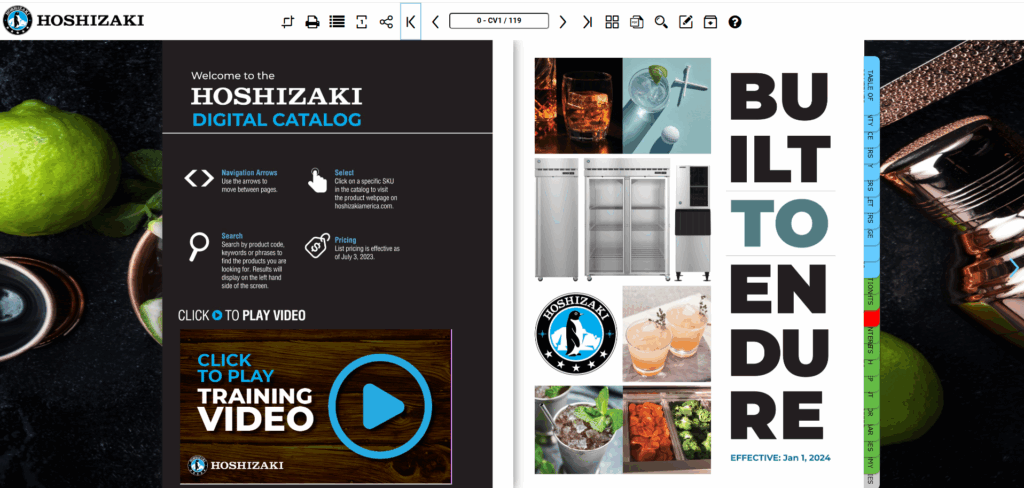
As a result, they enhanced their product presentation and customer engagement. Their digital catalog showcases several advanced features such as: an introduction page with a clear explanation of how to use the catalog; organized navigation with bookmark tabs for intuitive browsing; and automated linking, which connects all SKUs directly to their respective product landing pages, streamlining the path from browsing to detailed product information.
This is what smart business catalog creation looks like. The features detailed above collectively aim to improve user experience, reduce manual navigation, and enable quicker access to product details, which are critical factors in B2B sales environments.
How To Boost B2B Sales With Interactive Digital Catalogs
Catalogs for businesses can seem daunting to put together, but the end result is an interactive digital catalog that will boost sales and reach. These types of catalogs drive engagement with interactive features, personalization, and engagement tools.
Enhance Product Discovery
One of the biggest pain points in B2B sales is helping buyers find the right product in a sea of options. With digital catalogs, customers can filter terms by keyword searches. Once they click on that keyword, they will be taken to the page and have a highlighted zoom feature to point them directly to the product. They can also use tabs, table of contents sections, and thumbnail images to scroll through quickly and find what they are looking for.
High-quality visuals and detailed product descriptions also play a key role in boosting sales with interactive digital catalogs. Including high-quality images, along with zoom-in features, ensures that customers can examine products closely before making a purchase. This feature is especially important for B2B products, where accuracy and detail are critical.
Drive Engagement with Interactive Features
Static catalogs simply do not hold the users’ attention the way an interactive catalog does. Digital catalogs offer a dynamic and engaging experience for the buyer. They drive engagement and keep customers interested in the content of the digital catalog.
Create a business catalog with features such as image pop ups, clickable links, embedded videos, and GIFs. Boost engagement by personalizing the catalog content, with specific pricing plans, product recommendations, or buyer-specific content based on roles or purchase history. Enable your customers to view the products more in depth. Transform your static content into a powerful sales tool, customized to your needs, and watch as the results stream in.
Reduce Purchase Hesitation with the Power of Personalization
The power of personalization within the interactive catalogs leads to more conversions and a boost in sales. In order to get eyes on your products, you first need to build trust in your company and products to reduce purchase hesitation. In the B2B environment, trust is everything.
Transparency makes it easier for decision-makers to feel confident in moving forward. You can build this sense of confidence through social proof and trust signals.
Provide instant access to documentation such as spec sheets, safety data, and installation guides. With a digital catalog, you can add these documents as HTML pop ups which are available to download or shareable by a link.
Throughout your digital catalog, showcase use case studies, certifications, and testimonials to provide real-life stories about how your company and products have made a difference in the life of other B2B customers.
Altogether, these elements make your digital collateral informative and easy to understand, which will help your customers to better connect with your products, services, and your company.
Create a Mobile-Friendly Design to Reach More Buyers
B2B buyers aren’t just logging on at their computers – they are on the go – working from job sites, in warehouses, or remote. This is why you need to create a mobile-friendly digital catalog design that will reach more buyers.
The importance of mobile optimization in B2B sales means ensuring your content is always accessible, no matter what device it is on. Keep functionality in mind. Create a responsive design that ensures your catalogs always display flawlessly on smartphones and tablets. Enable offline access through downloadable pages or entire catalogs to help keep teams productive in low-connectivity environments. For mobile features, consider implementing scrollable content, a pull out table of contents tab, and easy to use buttons to create a frustration-free experience.
Leverage Data-Driven Insights
When you make a catalog for your business, you receive many benefits to leverage, including data-driven insights. These insights include:
- Pages viewed
- How long users spend on each page
- Which products were clicked on or zoomed in on
- Pages downloaded
Tracking user behavior within the catalog paves the way for continuous improvement in customer relations. With this data, businesses can identify popular products or pain points, refine content and navigation throughout the catalog, and segment customers for follow-up campaigns. Adding the personal touch to marketing campaigns will help you to gain the trust and loyalty of your customers.
How to Create a Catalog for Your Business
Recognizing that implementing an interactive digital catalog within your business is the first step – acting on its creation is how you build that competitive advantage. But, how to get started?
B2B businesses that successfully boost their sales with digital catalogs do this by choosing the right platform, using best practices with interactive features, and following up with data-driven insights. Let’s examine these more closely.
Choose the Right Platform
It is crucial to choose the right platform to create your digital catalog. At first glance, they may seem like they do similar things, but on closer examination you will find that there are key differences. The most important things to look for in a platform are:
- Easy integration with your existing systems (PIM, ERP, CRM)
- A variety of customizable templates
- Built-in analytics and reporting tools
- Mobile-friendly and SEO-ready design
Best Practices for Implementing Interactive Features
To get the most out of your business catalog, consider the following:
- Keep navigation intuitive with clear categories and calls to action
- Use high-quality visuals to showcase product details
- Embed lead capture forms and contact tools where appropriate
- Regularly update your catalog to reflect inventory, pricing, and promotions
DCatalog’s intuitive platform offers you diverse features, custom options, and ease-of-use. We empower B2B businesses to make a catalog for your business that stands out and turns your content into a strategic sales engine.
Final Thoughts: Embrace Digital Transformation
In a B2B business, adopting interactive catalogs is a key step to staying ahead in a competitive environment. Aligning yourself with your customers leads to improved customer relationships, higher sales conversion rates, and stronger business growth. It’s no longer enough to optimize static catalogs – you need to rethink how to actively simplify the buying process.
DCatalog helps B2B businesses do exactly that.
DCatalog transforms static PDFs into interactive and data-driven digital catalogs, enabling a quicker close of sale, enhanced customer engagement, and a seamless shopping experience – all without needing to invest in heavy design or development work.
By embracing the digital transformation and using interactive catalogs as a strategic tool in your sales practice, you will:
- Stay ahead of competitors
- Streamline the buying process
- Increase conversion rates
- Drive sustainable business growth
See it in action – Reach out to one of our Publishing Executives today, or sign up for a free trial to experience our platform for yourself.